If you have been comparing Dormont to other South Hills boroughs on a portal, you have seen the same headline number I have. In May 2026, the median sale price in Dormont came in at about $282,000, down roughly 5.1% year over year, with homes taking around 48 days to sell. Read that alone and Dormont looks like it is cooling.
Read it next to the state and the picture inverts. Pennsylvania's May 2026 median was $318,867, up 5.6% year over year, with 32.3% of homes selling above list and a sale-to-list ratio of 98.9%. Dormont's median moved the opposite direction from the state it sits inside. That is the number worth stopping on, because the reason has almost nothing to do with buyer demand and almost everything to do with a one-square-mile borough that is about to split into two distinct submarkets.
The number that doesn't add up
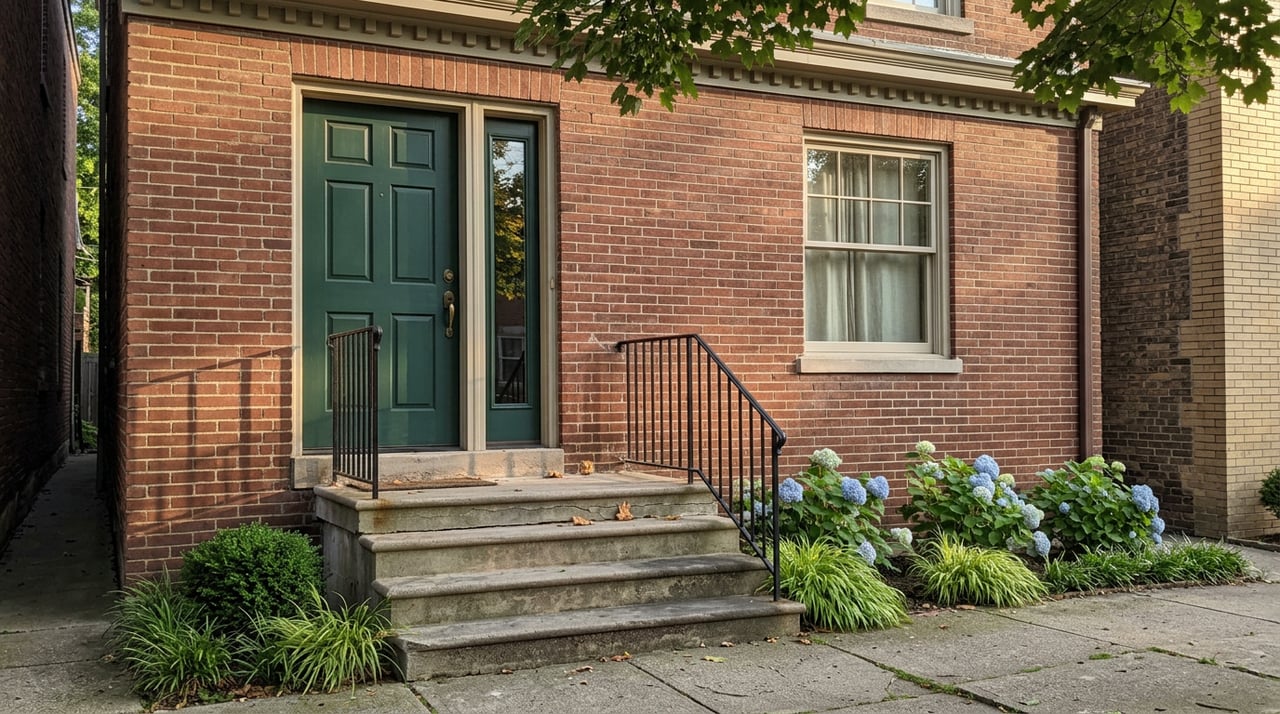
Dormont is small enough that a handful of two-bedroom sales in a given quarter can swing the median. The borough's housing stock skews older and denser than Upper St. Clair or Mt. Lebanon, with a heavy share of duplexes and small single-family homes clustered around the T. When those trade, they pull the median down without saying anything about what a renovated three-bedroom on the north end is worth.
So the useful question is not "is Dormont up or down." It is: where inside Dormont is the market actually moving, and why. The answer changed on June 1, 2026.
The June vote most buyers missed
At its June voting meeting, Dormont Borough Council authorized an Exclusive Negotiating Agreement with Pittsburgh Regional Transit, Pennrose LLC, and the Falbo Group to determine whether a transit-oriented development is feasible on 2.5 acres of current surface parking at Dormont Junction Station. The public keeps ownership through a long-term ground lease rather than a sale. The ENA does not lock in construction, but it is the first time in the project's decade-long planning arc that a specific developer, transit agency, and borough are legally at the same table.
Alongside the TOD, PRT has its own timeline for the station itself. The redesigned Dormont Junction Station goes out to bid in summer 2026, with a target of PRT Board approval for a contractor in fall 2026 and station construction beginning in spring 2027. The project already has a $500,000 federal appropriation announced by Congressman Chris Deluzio in 2024, and the station currently moves roughly 500 weekday riders on the Red Line.
Here is the compressed timeline a buyer should be holding in their head:
- June 2026 — ENA signed with Pennrose, PRT, and Falbo Group.
- Summer 2026 — PRT puts station reconstruction out to bid.
- Fall 2026 — PRT Board expected to approve a contractor.
- Spring 2027 — Station construction begins.
- After station completion — Mixed-use, mixed-income TOD on the 2.5-acre parking site follows.
Dormont amended its zoning in 2021 to allow larger multi-family buildings near transit, and in 2025 the borough folded the TOD into its long-term growth plan. That sequencing matters. The zoning is already in place. The federal money is already committed. What was missing until this summer was a developer under contract. That gap has closed.
Why the median hides the map
Dormont is walkable in a way most South Hills communities are not. The borough is one square mile. Two Red Line stops sit inside it. Potomac Avenue runs as the commercial spine, and a segment of it was recently rebuilt with permeable pavers, new tree planters, and updated street lamps. That corridor has thickened in the last few years with Moonlit Burgers at 1426 Potomac Avenue, Potomac Station Coffeehouse at 1607 Potomac, Pauly's, Arsenal Cider Tap House, Tal & Bert, Mike & Tony's Gyros, and the reopened Row House Hollywood theater. Dormont Park and the pool anchor the family side of the walkshed a few blocks north.
None of that is evenly distributed across the borough. A home three blocks from Dormont Junction is inside the corridor a TOD is designed to strengthen. A home on the far side of West Liberty Avenue is not. Both show up in the same median.
For a buyer, the practical split looks like this:
- Inside the Junction and Potomac walkshed. You are buying proximity to a station that is about to be rebuilt and adjacent land that is under active negotiation for mixed-use development. Expect competition on updated three-bedroom homes to hold up better than the borough-wide median suggests, particularly on streets with off-street parking.
- Outside the immediate walkshed. Values are more tied to condition, lot, and comparable South Hills stock. This is where the softer median is doing most of its work, and where a patient buyer has the most leverage in Q3 and Q4 of 2026.
- Two- to three-unit properties near the T. These have been trading, and their pricing has an investor floor that behaves differently from owner-occupied singles. If you are an owner-occupant, do not read a duplex comp as your comp.
What the transaction actually looks like here
A few Dormont-specific frictions are worth knowing before you write an offer.
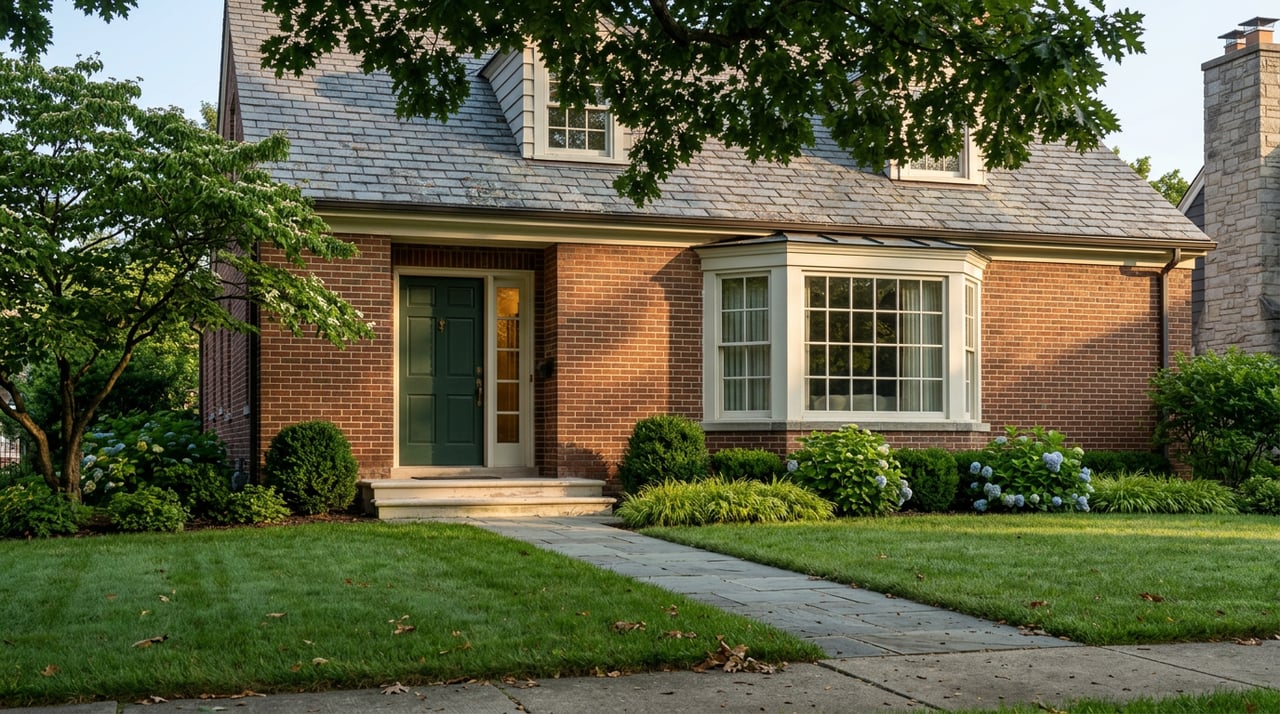
Older housing stock means older systems. A lot of Dormont's single-family inventory was built between roughly 1910 and 1940. Knob-and-tube remnants, galvanized supply lines, and clay lateral sewer lines are common enough that a scoped sewer inspection is not optional in my listings, and I would say the same on the buy side. In Pennsylvania, sellers are required to complete the state's Seller's Property Disclosure Statement, and the way an owner answers the sewer and electrical questions can telegraph what an inspection is about to find.
Off-street parking is a real pricing variable. West Liberty Avenue has restricted overnight parking on stretches, and streets closer to the T fill quickly. A one-car integral garage or a legal parking pad can add real dollars to a Dormont comp in a way it does not in a lower-density suburb.
Zoning near the station now permits denser development than it did five years ago. That is a positive for long-run values inside the walkshed and something to read carefully if you are buying a single-family within a block or two of a parcel that could redevelop. The Borough of Dormont's Dormont Junction TOD page publishes the current status, and PRT's Engage PRT project site posts the station timeline.
So what does your money actually buy
If your budget is in the high $200s, you are shopping the borough's median inventory. Realistically that is a two- to three-bedroom home, often with one full bath, that has had cosmetic updates but not a full system overhaul. Days-on-market of 48 gives you room to write a considered offer rather than a rushed one, and Pennsylvania's 98.9% statewide sale-to-list ratio suggests that reasonable offers under ask are being accepted in balanced pockets.
Push into the mid to high $300s and you are typically buying either a renovated single-family with parking inside the walkshed, or a legal two-unit near the T that pencils as a house-hack. That second category is where the June ENA news matters most. You are underwriting a property whose surrounding land use is on a published trajectory, not a hypothetical one.
Above roughly $400,000, Dormont inventory thins quickly, and the comp set starts to overlap with Mt. Lebanon and Brookline. At that price you are buying a specific house, not the median.
FAQ
Does the TOD mean prices are about to spike? No. Council authorized negotiation, not construction. The station rebuild is the nearer-term catalyst, with bids this summer and construction expected in spring 2027. Values inside the walkshed have a clearer runway than they did a year ago, but the meaningful land use change is still years out.
Is the borough selling public land to a developer? No. The published structure is a long-term ground lease. The borough and PRT retain ownership and collect lease income while the developer builds and operates.
How should I think about resale if I buy near the station now? Two horizons. In the next 12 to 24 months, your resale is governed by rate movement and the same PA-wide dynamics as any other South Hills home. Beyond that, you are also holding an option on the walkshed getting denser and better connected. Price the home on today's fundamentals, not on the TOD.
What is the biggest inspection surprise in Dormont? Sewer laterals. Homes of this vintage frequently have clay lines with root intrusion. A camera scope during the inspection period is inexpensive relative to what it can find, and Pennsylvania's disclosure form gives you a starting point for the conversation.
If you are weighing Dormont against another South Hills borough and want a walk-through of specific streets, inspection expectations, and what a realistic offer looks like on today's inventory, Theresa Doran is available for a free consultation. Clear guidance, confident moves.